Work / Case study 07

Plein Air
Where the Impressionists painted
It started at the MFA
The idea goes back to my college years in Boston, when I used to go to the MFA on Friday nights just to see the Impressionist collection. These painters worked outdoors, easels planted on riverbanks, in gardens, on village streets — so every canvas has a real place behind it. Standing in front of Monet's haystacks, I kept wanting to know where those places were, not just the museum wall where the paintings hang now.
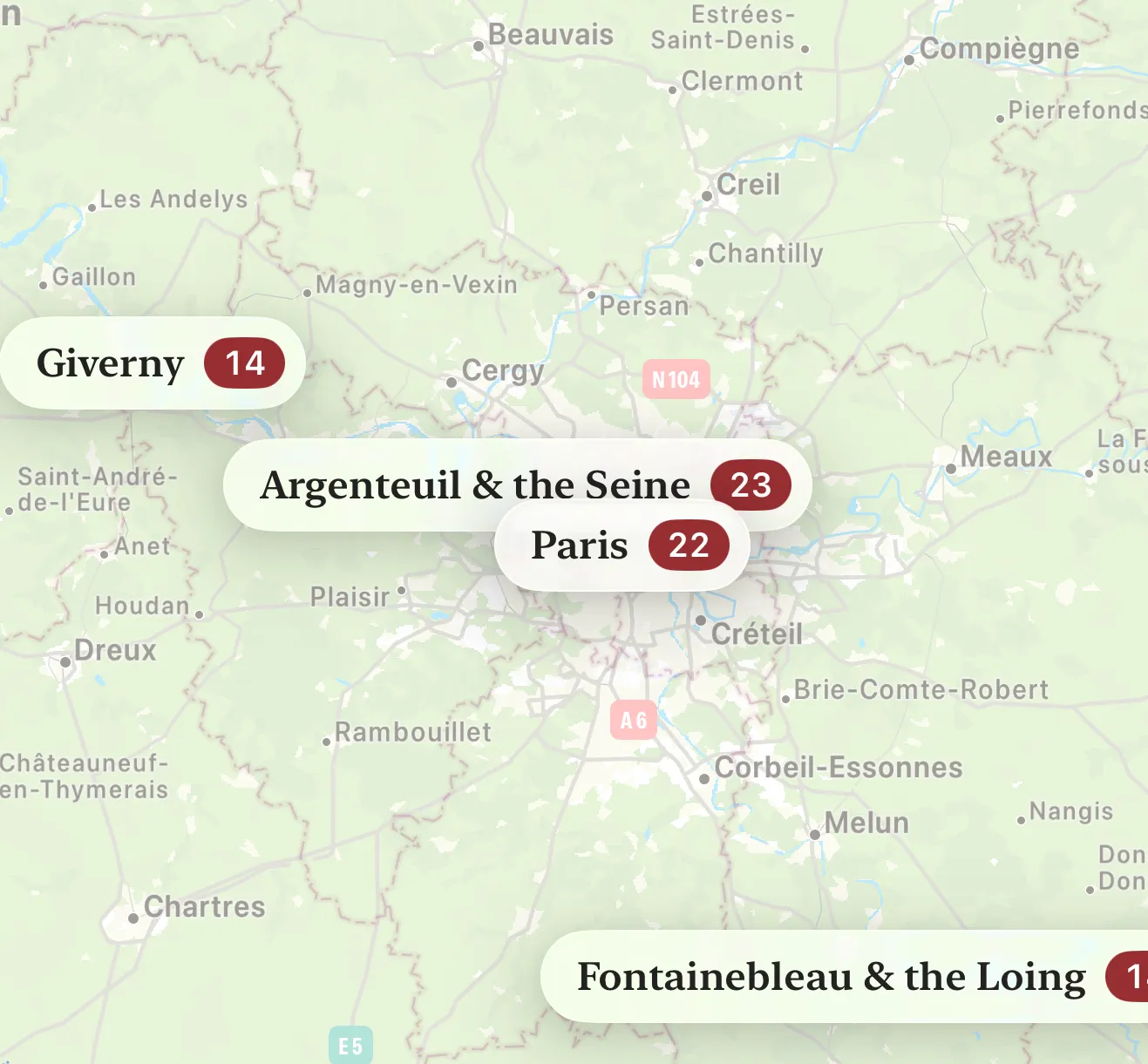
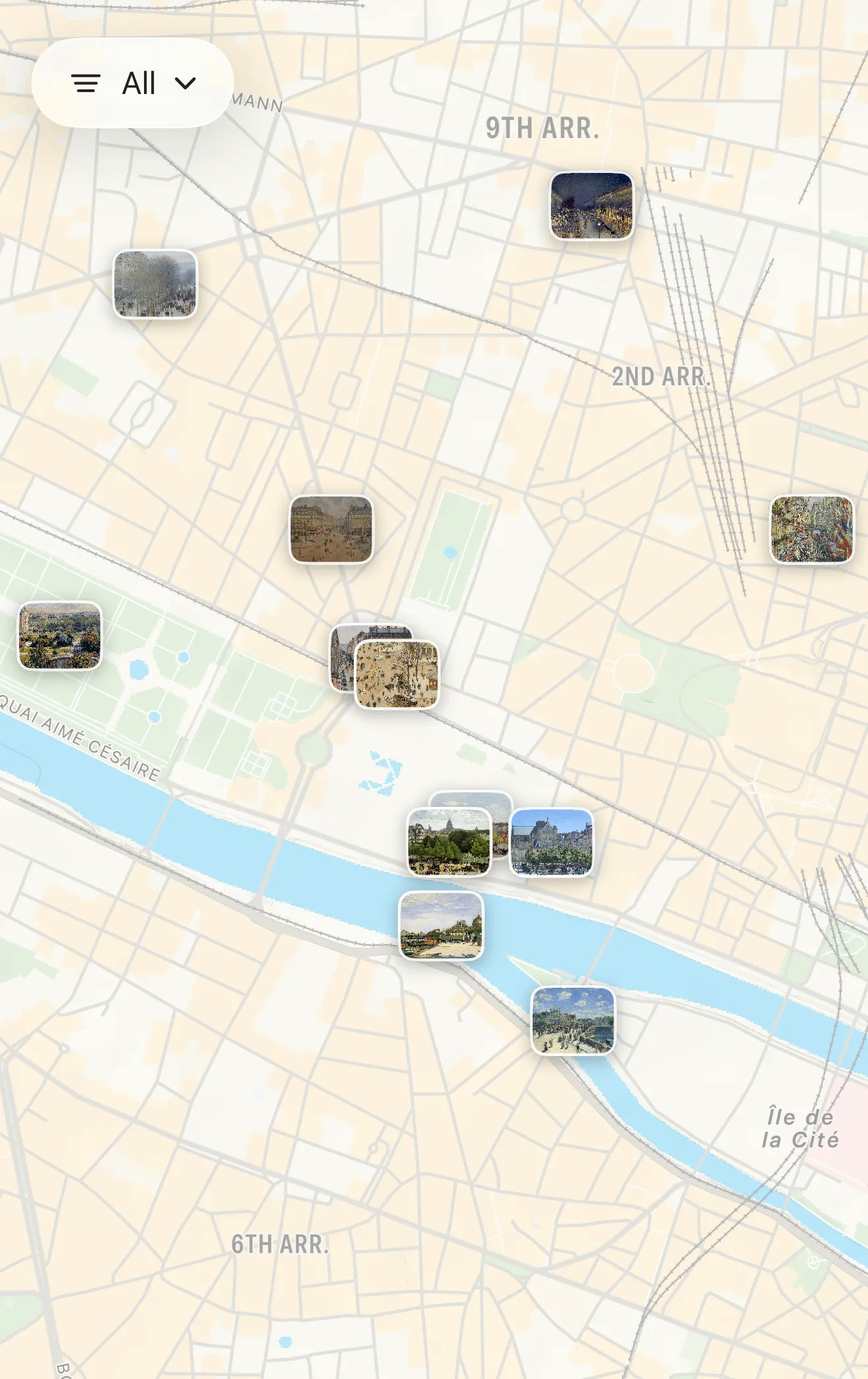
That's what Plein Air does. It puts the paintings on a map, at the spots they depict, and lets you flip between the canvas and the same view today. It is for exploring from the couch, but also for the much better version: taking it with you somewhere.
Follow the paintings into the world
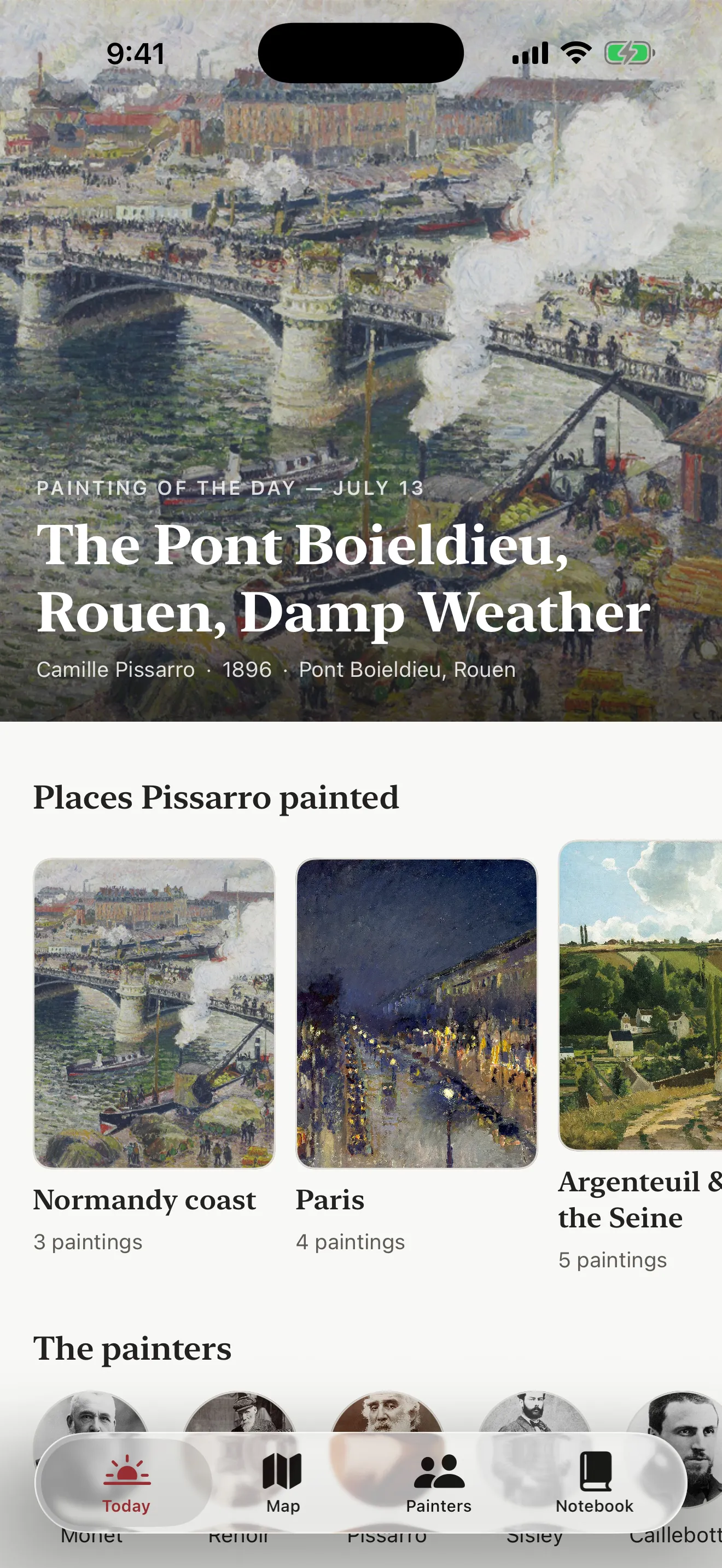
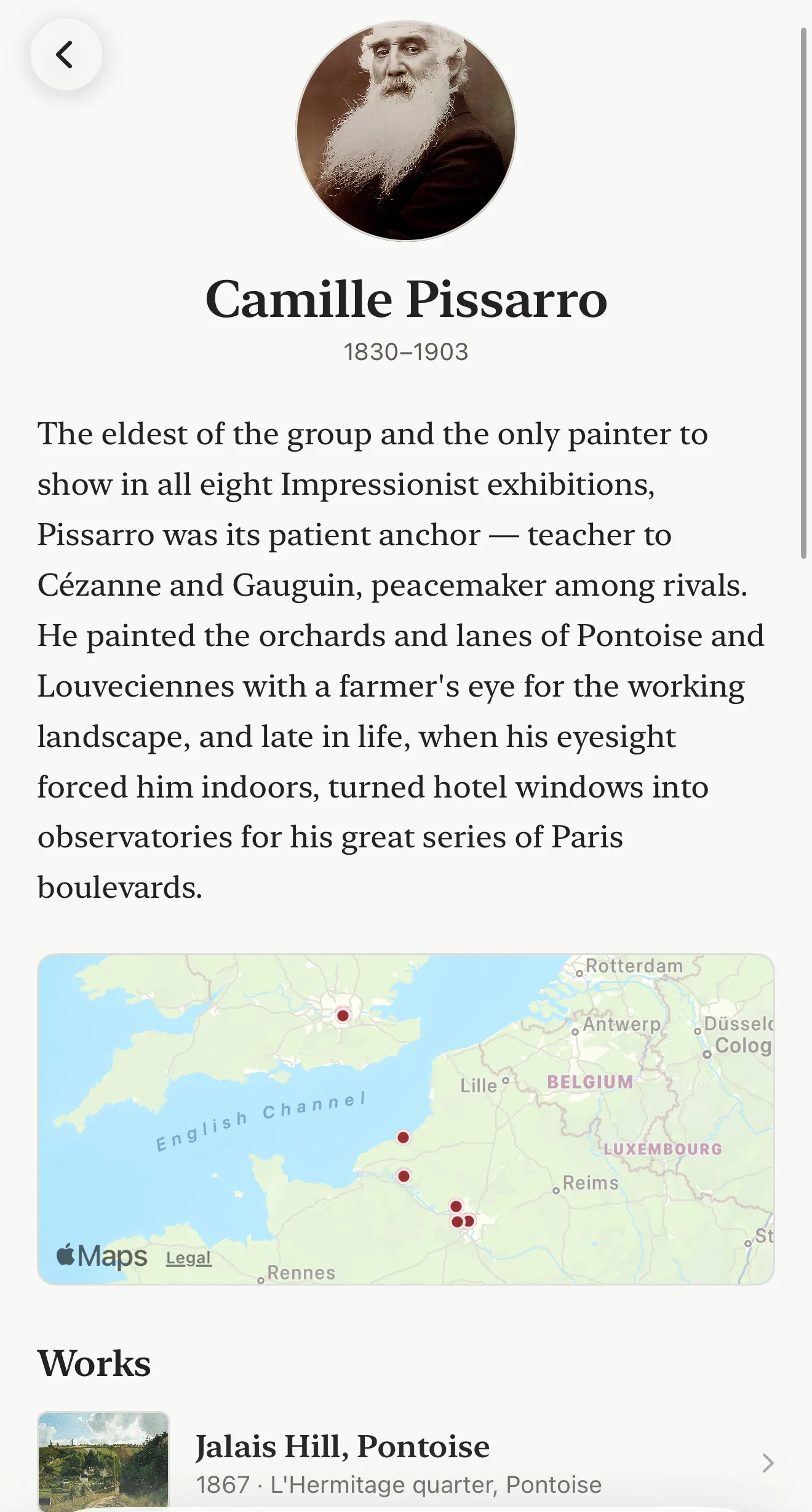
The map is the primary way in. Open a region, find the cluster of work around a town or coastline, and see paintings as little canvases rather than generic pins. You can follow Monet through Giverny, Pissarro along the Seine, or find the locations hidden in and around Paris. It feels less like browsing a database and more like following a loose itinerary through art history.
Then & now
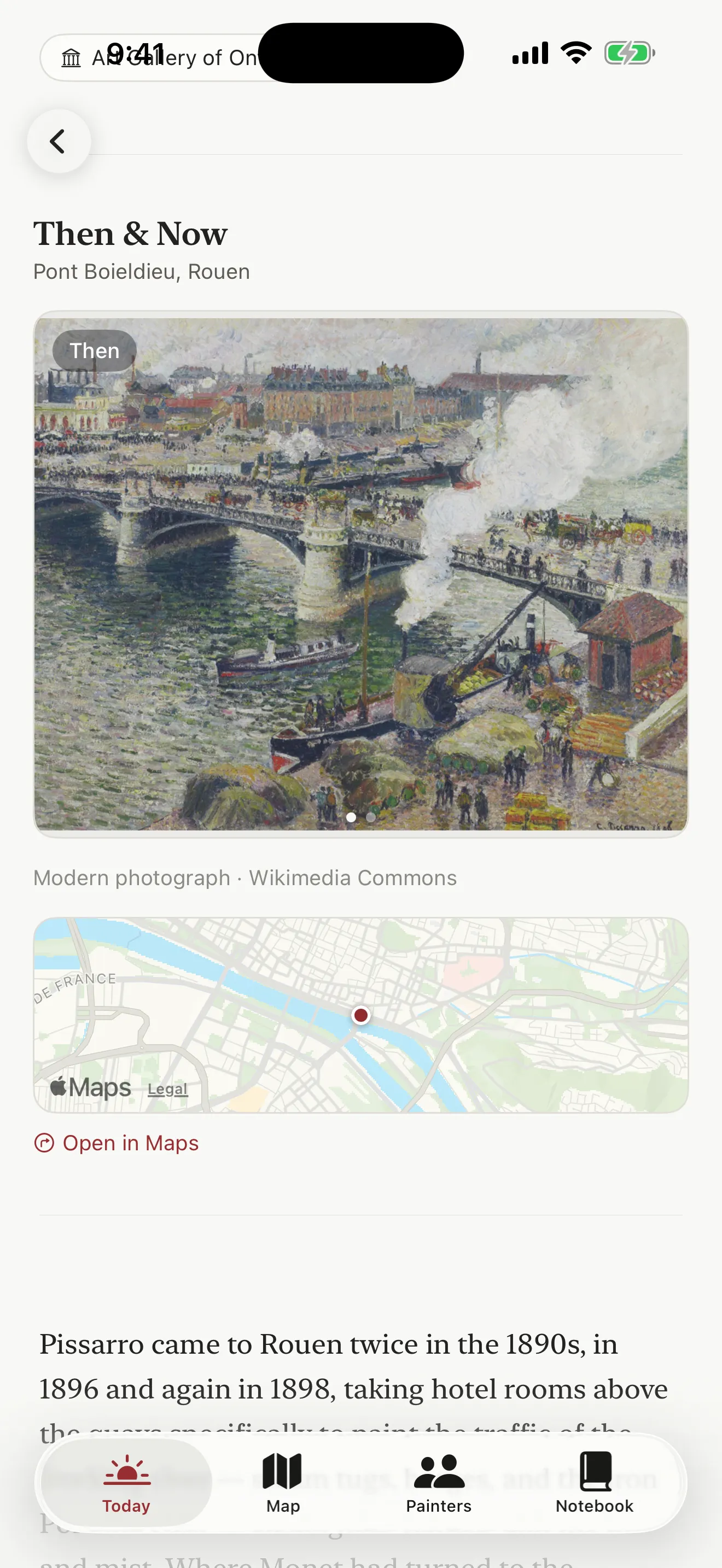
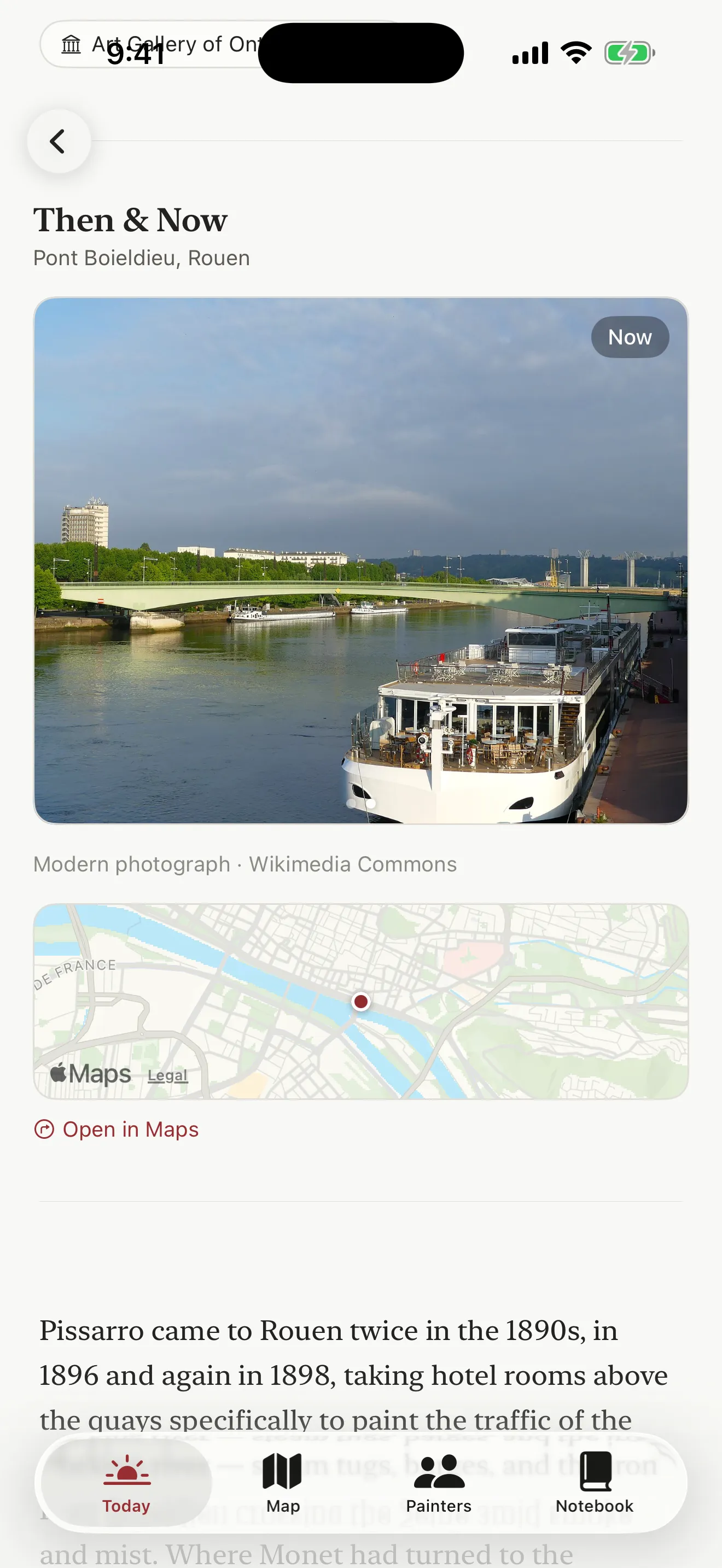
The bit I love most is turning between the painting and a present-day photograph of the same view. Sometimes a harbor or a bridge has changed completely; other times the scene is strangely still there. The interaction treats them as two separate views of one place, not an image match that has to be perfect — a century apart, side by side.
Beauty in the commonplace
Many of the Impressionists settled in the countryside and suburbs around Paris — not because those towns were special, but because they couldn't afford to live closer to the city. Those suburbs have changed a lot since the painters' time: they industrialized and became modern, full of concrete apartments — less poetic, perhaps. In the 60s and 70s the factories closed, the workers left, and the suburbs became increasingly home to immigrant communities. (If you watched the World Cup, a good number of the French team's players grew up in them.) But the lesson is the same: there is still beauty and meaning anywhere you live, if you have a good pair of eyes to see it.
Also: where the paintings live now
A painting's story does not end at the place it depicts. Plein Air also shows the museum where the work hangs today, so a map pin can turn into the next museum visit. You can keep a small notebook of paintings you have seen and places you have visited, too.
I wanted the app itself to stay quiet: no account, ads, tracking, or location permission.
Outcome
Plein Air is live on the App Store. The first release covers 140+ paintings across 14 regions, 22 painters, and 88 museums, with English, French, and Japanese localization.